
Ford Transit Electrical Upfits: Build a Better Organized Service Van
Plan an electrician’s Transit around the parts you reach for, the cable you carry and the jobs you need to finish. Start with a suitable van available at the dealership, then define the equipment that makes it work for your crew.
A useful electrical van upfit combines secure parts storage, protected test equipment, retained cable and conduit, appropriate ladder handling and clear working access. The right layout comes from your actual inventory and job mix—not simply filling every wall with shelves.
Talk with Frank about available vehicles and upfit coordination in Fort Myers and Southwest Florida. Call 239-274-2405.

Use the WEATHER GUARD Electrical Layout as a Starting Specification
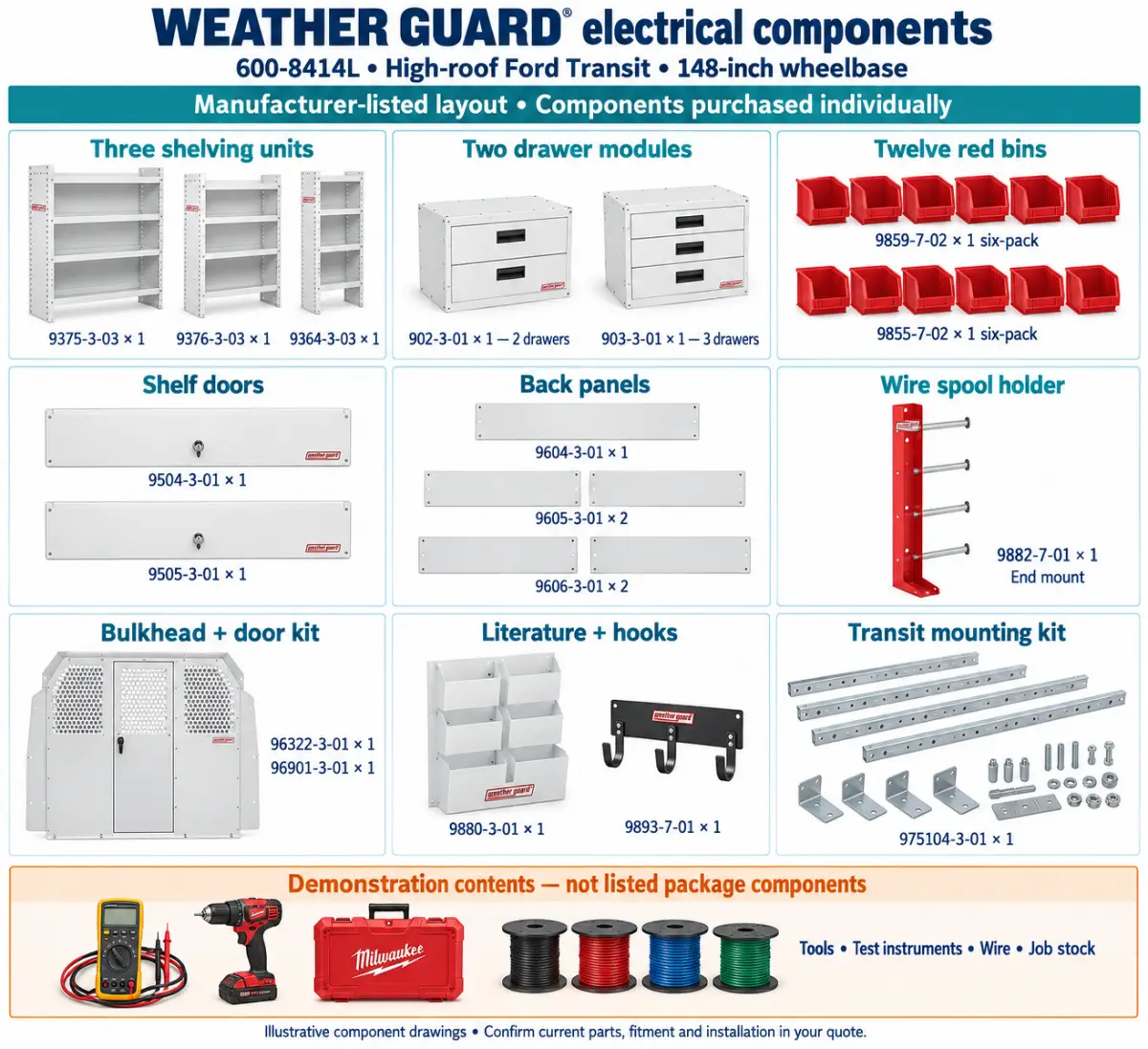
An electrical package should organize small parts, protect instruments and give wire its own storage without blocking larger tools. The reviewed WEATHER GUARD 600-8414L example targets a high-roof, 148-inch-wheelbase standard-body Transit. Its component layout includes shelving, shelf doors, separate two- and three-drawer modules, bins, a wire-spool holder and a literature holder, along with partition and mounting equipment. Confirm the component list for the exact roof and body variant before selecting.
The value is the separation of tasks. Bins make replenished connectors and fittings easier to identify. Drawers provide defined locations for tools that would otherwise migrate between shelves. A spool holder gives compatible reels a planned position. None of these features settles the conduit route, the dimensions of a large test case or the space needed for project deliveries.
Choose storage by stock behavior
Sort inventory into items used every day, project-specific stock and rarely needed spares. Reserve the most accessible locations for daily supplies and keep project material removable. Otherwise, one large installation can permanently consume the space intended for ordinary service work. Label bins according to the business’s purchasing system so restocking does not depend on one technician’s memory.
For the complete family comparison, see our Ford Transit upfit guide. A simpler commercial or general-service layout may be appropriate when the business carries relatively little loose stock. Choose the contents and access first, then the package name.
Test the Layout Against Three Electrical Jobs
A short diagnostic visit
Identify the case and hand tools taken to nearly every service call. Make them reachable from the normal parking side without moving wire reels or project boxes. Keep the storage opening large enough for a gloved hand to grip the case. Confirm the case remains restrained during travel rather than relying on a tight fit between other objects.
A day of installation work
Lay out the actual reels, boxes and longer materials needed for a typical project. Check whether the door opening and aisle allow loading in the intended order. Decide where surplus material goes on the return trip. If a project consumes the full floor, the daily service kit should still have a defined and accessible location.
A mixed day with a second technician
Account for each person’s equipment and the effect of a larger crew on the working load. Do not design the van around one empty tool bag if two technicians routinely carry separate sets. Review where they retrieve equipment and whether opened drawers block another needed compartment. This is a planning exercise, not a promise that both people should work inside the van at once.
Record any conflict on the floor plan. Moving one deep cabinet or changing one shelf run can be more useful than adding storage everywhere. Our Transit shelving guide explains how to compare one-sided, two-sided and mixed layouts.

Turn the Inventory Into an Accurate Electrical-Van Proposal
Send the dimensions and loaded weights of the largest reels, cases and machines, plus conduit lengths and ladder information. Identify any equipment that needs charging while parked and the devices used at the same time. The installer needs these details to propose the mounting and power arrangement; a generic request for an inverter is not a complete specification.
Ask for itemized storage, partition, flooring, rack, power and installation lines. Distinguish included holders from owner-supplied tools and stock. Before delivery, test the arrangement using representative equipment and confirm the clear loading path. Keep a copy of the final parts list for replacements and future vans.
Frank can help compare available Transit configurations and coordinate an electrical upfit around that inventory. Tell us what work you perform, how soon the van is needed and which features are essential on day one. We will separate vehicle availability from component and installation timing so the proposed completion plan is clear.

What Should an Electrician’s Van Upfit Include?
The essential components depend on whether your technician handles service calls, residential installations, commercial maintenance or project work. A service technician may need many small devices and connectors within quick reach. An installation crew may need more room for cable, conduit, boxes and larger tools. Treat these as different layouts even when both crews drive the same Transit configuration.
Begin with a physical inventory. Separate everyday stock, occasional equipment and materials loaded for one project. Record container dimensions and approximate loaded weights rather than listing only product names. A shelf labeled “electrical supplies” gives an installer little direction; a list of labeled bin sizes, spool dimensions and tool cases can become a workable plan.
Our electrical contractor vehicle guide compares the broader vehicle choices. This page focuses on arranging the Transit interior so those business requirements become practical storage, access and equipment decisions.
Choose the Transit Configuration Before Specifying the Interior
Roof height affects how technicians move inside the van, but interior standing space must be checked after flooring and ceiling equipment are considered. Body length affects the room available for shelving, a clear aisle and project materials. A longer van can carry a more extensive layout, but it also changes the space needed at customer properties and parking locations.
Compare the exact vehicle’s door openings, wheel housings and usable cargo dimensions with your longest equipment. Do not assume that two vans described as Transit accept the same package. Shelving brackets, partitions and ladder racks must suit the specific configuration and the equipment manufacturer’s fitment requirements.
Start with the Transit cargo van guide, then discuss the vans actually available. Choosing the vehicle and interior together reduces the risk of buying a van first and discovering that an essential reel, ladder or case cannot be carried as planned.
Wire and conduit access
Organize Small Parts Around the Way Calls Are Completed
Electrical service work involves many compact items that become difficult to track when mixed together. Group parts by the technician’s real tasks: devices and plates, connectors and fittings, mounting hardware, labeling supplies and consumables. Use clear labels that match the purchasing and restocking process, so a different technician can find and replenish the same item.
Open bins may suit frequently handled lightweight stock, while drawers or enclosed compartments may better suit items that need separation or protection. Neither format works well when loaded beyond its intended capacity. Ask the installer how containers are retained during travel and whether the chosen shelf depth leaves enough aisle room when doors or drawers are open.
Give returns and unused project stock a defined location. Otherwise, miscellaneous material often displaces the everyday supplies the layout was designed around. A dedicated return bin also makes end-of-day restocking more deliberate. Review Transit shelving and cabinet and storage options together.
Plan Cable Reels and Conduit as Separate Storage Problems
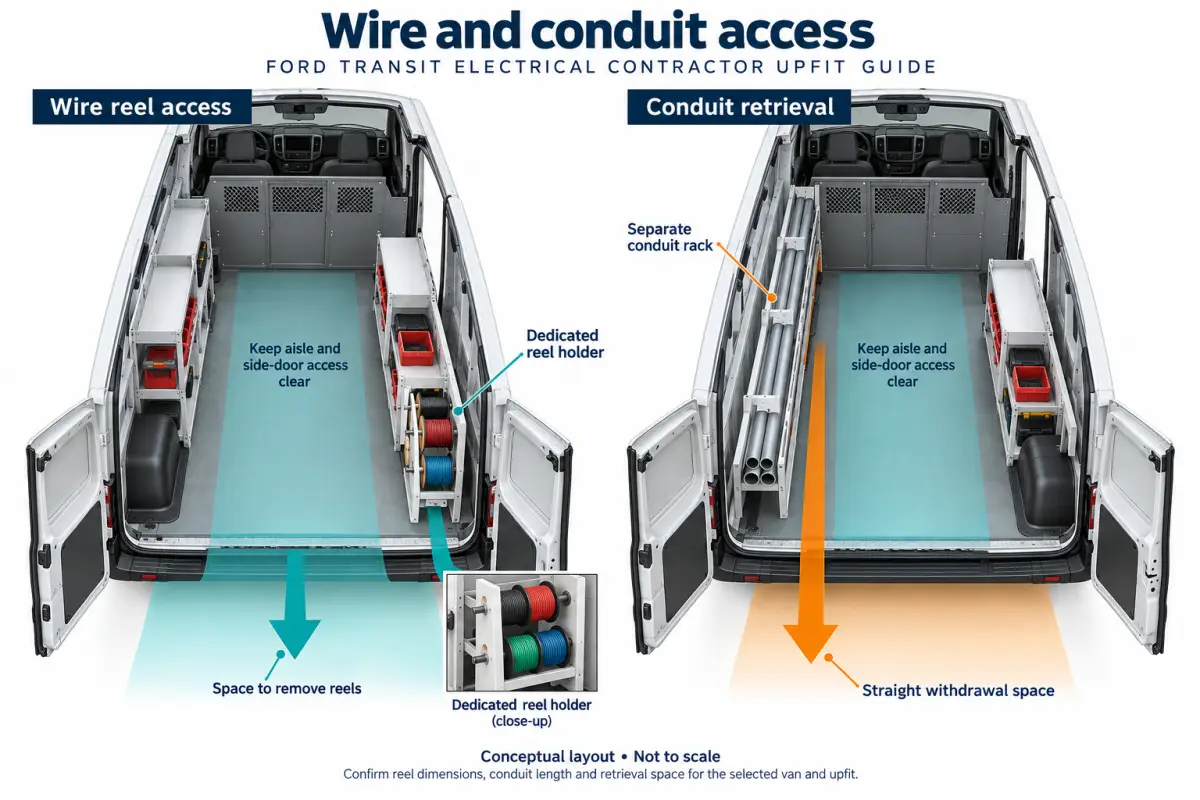
Cable reels vary in diameter, width and loaded weight. Record the largest normal reel as well as the usual quantity. If dispensing equipment is proposed, ask the provider to confirm its compatibility, retention method and operating requirements. Storage space alone does not establish that a reel can be safely transported or used in that position.
Conduit and other long materials need their own dimensional review. Measure the material, any protective container and the path used to load it. Consider whether it would block a door, interfere with the partition or require other cargo to be unloaded first. A roof carrier is one possible approach, but it changes overall vehicle height, loading access and equipment weight.
Separate everyday quantities from bulk project deliveries. Carrying enough material for every imaginable job can consume payload and interior room unnecessarily. A better plan may keep reliable service stock in the van while scheduling larger project materials separately. Tell us how your crew currently receives, transports and returns those materials.
A usable aisle with project stock

Protect Test Instruments and Expensive Tools
Meters, diagnostic instruments, specialty tools and calibrated equipment deserve more planning than a free shelf. Keep them in appropriate cases and compartments according to their manufacturers’ storage requirements. Review the compartment size with the actual case open and closed; a case that fits tightly may still be awkward to remove between other equipment.
Position routinely used tools where technicians can retrieve them without shifting heavy stock. Avoid creating a layout where a daily tool is buried behind occasional equipment. For shared vans, consider a labeled location for each case so missing equipment becomes easier to notice during handoff.
Lockable storage can help organize access, but it should not be described as theft-proof. Discuss the vehicle’s parking routine, visibility of valuable equipment and the business’s own security procedures. Storage equipment is one part of that plan. The Transit bulkhead guide explains another important element of separating the driving area from the cargo space.
Coordinate Ladder Access, Roof Equipment and Clearance
List every ladder by type, length and weight, then describe who loads it and how frequently. A rack should fit the actual van and the actual ladders, with the equipment supplier confirming the mounting and operating requirements. Evaluate access at customer properties as well as at the dealership: uneven ground, narrow parking spaces and nearby vehicles can affect the loading routine.
Overall clearance includes the van, rack, ladders and any additional roof-mounted equipment. Measure the completed arrangement before relying on access to a garage or covered work area. Do not use the van’s published body height as the final clearance figure.
Some crews may keep smaller ladders inside, but that decision must account for retention, loading paths and the aisle. The most convenient option is the one your technician can use consistently in the real working environment. Bring your ladder list when reviewing Transit ladder rack options.
Specify Charging and Work Power by the Equipment Load
Write down each charger or powered device, its electrical requirements and the number expected to operate at the same time. Include how long power is needed and whether the engine will be running. Those details help a qualified equipment provider assess the proposed system; the phrase “add an inverter” does not define a complete power plan.
Charging equipment also needs appropriate mounting, cable routing, protection and the ventilation or temperature conditions required by its manufacturer. Keep travel retention separate from the procedure for charging batteries. A convenient shelf location is not automatically suitable for every battery or charger.
Have any vehicle electrical installation reviewed for the selected Transit and equipment. Confirm the intended installation method, protection, service access and warranty responsibilities in the quote. Our commercial vehicle power guide helps organize that conversation without assuming that one system suits every electrician’s van.
Keep the Completed Load Within the Vehicle’s Limits
Shelving, drawers, racks, flooring and power equipment all add weight before tools and stock are loaded. The working load also includes occupants, project materials and any other carried equipment. A spacious cargo area can reach a weight limit before it appears full, particularly when dense materials and multiple reels are involved.
Review the actual vehicle’s ratings and the proposed equipment weights with the dealer and upfitter. Load distribution matters as well as total weight. Heavy equipment concentrated in one area needs specific review rather than an assumption that unused space elsewhere compensates for it. Confirm axle and tire limits along with the overall vehicle rating.
A useful final check is to assess the completed van in its realistic working condition. Keep a record of the installed equipment and normal inventory so later additions can be evaluated. Replacing a small tool with heavier equipment or increasing cable stock can change a previously acceptable loading plan.
Make the Quote Describe a Complete Working Layout
Request an itemized proposal that identifies the van, major equipment, installation work and any exclusions. Shelf quantities alone are not enough: include dimensions, bin or drawer arrangements, partition type, ladder equipment and any power-related scope. Confirm whether your own existing equipment will be transferred and who evaluates its condition and compatibility.
Separate vehicle availability from equipment availability and installation scheduling. A Transit on the ground may still need ordering, fitting and inspection of its interior before it is ready for your technician. Ask for a proposed completion schedule with the dependencies clearly stated.
Before handover, walk through the actual loading and retrieval sequence. Open drawers, remove the largest case and check door access with the intended stock in place. Resolve any differences from the agreed layout before treating the van as ready for service. Our upfit coordination guide explains how to keep those decisions organized.
Example: Separate Service Stock From Project Materials
Consider a business replacing a service van that also supports occasional installation work. Start by mapping a normal service day: the technician retrieves a meter, a tool case and several small-parts bins, then returns unused material after each call. Those items deserve consistent, accessible locations.
The occasional installation may require larger cable reels and boxed equipment. Instead of permanently filling the aisle with that stock, identify a retained loading area and check the weight and dimensions of the project load. This is a planning example, not a promise that a particular Transit will fit every requirement. The actual vehicle and layout still need review.
Bring photographs of your present storage and a list of the items most often moved out of the way. Those details can reveal a better layout faster than choosing equipment from appearance alone.
Bring These Details to the Conversation
- Normal service inventory and largest project load
- Cable reel and conduit dimensions with loaded weights
- Ladder types, tool cases and test equipment
- Charging devices and expected simultaneous use
- Crew size, parking constraints and existing equipment
Include your vehicle quantity, target ready-for-work date and any stock number you are considering.
Let’s Match the Vehicle and Equipment to Your Work
Tell Frank what electrical work your crew performs and what slows down the current van. We can help identify an available Ford Transit and develop a clear equipment request around those priorities.
Start with what you know. We can help compare available Ford vehicles, identify the requirements to take to the upfitter and clarify the proposed equipment, price and completion schedule. Vehicle availability and installation timing are confirmed separately.
Send your requirements below, call 239-274-2405 or email frank@commercialfleetvehicles.com.
Questions to Resolve Before Ordering
What is the best Transit layout for an electrician?
The best layout gives everyday tools and parts consistent access while retaining cable, ladders and occasional project materials appropriately. Start with the actual inventory, not a generic trade package. A service technician and an installation crew may need different storage arrangements even in similar vans.
Should electrical parts go in drawers or open bins?
Choose according to the item, quantity, retrieval frequency and retention requirements. Labeled bins can make commonly used stock easy to identify; drawers can separate smaller items or protect selected equipment. Check loaded capacity, latching and aisle clearance with the proposed storage supplier before deciding.
Can I carry conduit inside a Transit?
Possibly, depending on its length and the finished interior. Measure the loading path as well as the storage space, and confirm an appropriate retention arrangement. Shelving, partitions and other cargo can reduce usable room. If an exterior carrier is considered, include its weight and completed clearance in the review.
Can the van include battery charging equipment?
Yes, charging can be considered as part of the proposed upfit. Provide the charger requirements, quantity and operating schedule to a qualified equipment provider. The power source, mounting, protection and operating conditions must be suitable for the vehicle and equipment; capacity should not be assumed from an inverter label alone.
Do I need a high-roof Transit for electrical service?
A high roof may improve interior movement, but it is not automatically necessary. Compare technician access, parking clearance, ladder handling and the actual storage layout. Roof height does not by itself establish payload capacity. Review the exact configuration and completed equipment before selecting a van.
Can existing shelves be moved into a replacement van?
Ask the installer to assess their condition, dimensions and mounting compatibility with the replacement Transit. Equipment that fit the old van may need different brackets or may no longer support the preferred layout. Include removal, replacement parts and installation labor in the comparison with new equipment.
How do I get an accurate electrical van quote?
Send your crew size, normal stock list, largest equipment dimensions, ladder requirements, charging needs and target date. Include an available vehicle stock number if you have one. We can use those details to distinguish the vehicle price, equipment scope and installation schedule rather than quoting an undefined package.
Can you help me buy an available Transit and arrange the upfit?
We can help you review available Ford vehicles and coordinate the requirements for a suitable commercial interior. Availability, equipment compatibility, pricing and completion timing need confirmation for the specific proposal. Use the form on this page or call Frank to begin with the work your next van needs to perform.
Build Your Next Electrical Van Around Real Work
Get a clearer vehicle and equipment proposal. Share your inventory, workflow and deadline so we can help you move from an empty van to a well-planned electrical service setup.
Transit upfit options • Electrical contractor vehicles • Vehicle consultation