Ford Transit Cargo Van
Choose an available Ford Transit around your tools, cargo and daily loading routine—and plan the upfit before the first workday.
The right Transit Cargo Van is the configuration that fits the load, provides workable access and supports the finished equipment package. Compare roof height, length, carrying capability and required options together. Frank can help you review available vans and turn the job requirements into a specific vehicle and upfit request.
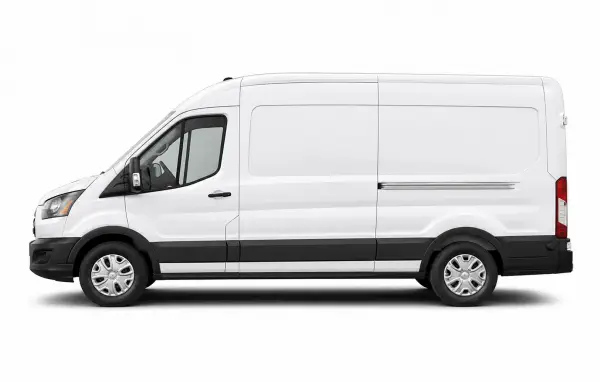
Model illustration; confirm the configuration and availability of the specific vehicle.
Start With the Job the Cargo Van Must Perform
A cargo van can serve as organized tool storage, a delivery vehicle or a mobile service base. Each role asks something different of the interior. Before choosing a configuration, decide which task accounts for most of the work and which secondary tasks the van must still support.
For a service business, list the tools, parts and larger equipment carried on a typical call. For delivery work, describe package sizes, route order and returning items. For a mobile workshop, identify the tasks performed at the van and any need for a bench, lighting or power. Those details guide the layout more effectively than a request for the biggest available van.
Include the people who use and load the vehicle in the discussion. A manager may focus on capacity while a technician notices the case that blocks the side door every day. Both perspectives help identify the features that improve the actual work.
Write a short assignment statement: what the van carries, how it is loaded and where it operates. Send that statement to Frank with your timing and quantity. We can use it to compare available vehicles and identify the questions that need to be resolved before purchase.
Roof Height: Compare Interior Use and Outside Clearance
Roof height affects how the crew reaches and works around the cargo. A lower interior may suit a retrieval-focused operation, while a taller interior can provide more room for shelving or work activity. Evaluate the finished layout rather than assuming a roof label guarantees comfortable movement for every person.
Flooring, ceiling treatments and installed equipment affect usable interior space. If a technician expects to work inside, check the intended working position and movement with the proposed upfit. A clear empty area may change after shelves, lights and other equipment are installed.
Compare outside clearance at the same time. Identify shop doors, covered loading areas and parking structures the van must use. Add any rack, ladder or roof-mounted equipment to the finished-height review. A configuration that improves interior room is only useful if it can still reach the places the business needs.
Prioritize the restrictions that cannot be changed. If a customer location has a fixed access limit, bring that information before selecting the van. We can then compare available configurations against the constraint rather than discover it after equipment is ordered.
Length and Layout: Measure the Loading Route
Start with the largest routinely carried item and its packaging. Measure the length, width and height, including handles or wheels. Then consider how the item enters the vehicle and turns into its stored position. Cargo space is useful only if the load can be handled through the actual openings.
Draw the bulkhead, wheel housings, storage units and aisle on one layout. Shelving on both walls uses width; a cabinet near the door can affect entry; a workbench may compete with a machine-loading position. Resolve those relationships before choosing a permanent arrangement.
Longer cargo space can support more storage or a flexible bay, but the business should have a defined use for it. Consider parking, route access and the employee’s loading routine alongside interior capacity. Additional space does not automatically improve retrieval if the items are poorly organized.
Test the plan with a typical load and the largest normal load. If the business expects pickups or return equipment, reserve a place for them. A van that works only at departure may become difficult to use halfway through the day.
Payload: Look Beyond Empty Cargo Volume
Cargo volume describes space; carrying capability is a separate question. The finished van must support the occupants, upfit, tools, materials and other equipment assigned to it. An empty interior can appear generous while a heavy working load requires a different vehicle configuration.
List the installed equipment and normal contents. Include shelving, flooring, a partition, power equipment, racks and any handling devices. Have the exact vehicle and finished arrangement reviewed against the applicable ratings rather than relying on a model-family maximum.
Ask for equipment weights where they affect the decision. A storage package’s empty weight and the tools it will hold both matter. If the van tows a trailer, include that operating condition in the review as well; the trailer’s load on the vehicle is part of the complete setup.
Use a realistic busy day rather than a best-case light load. Leave the discussion open to another configuration if the candidate van does not suit the assignment. It is easier to choose the right base vehicle before installation than to discover later that the equipment plan leaves insufficient carrying capability.
Choose Shelving, Cabinets and Open Space Deliberately
Divide the inventory into frequently used tools, small parts, larger cases and occasional cargo. Match the storage to those categories. Bins can make small items visible, drawers can organize hand tools, and measured shelf positions can accommodate cases. An open bay may be necessary for larger equipment.
Check usable dimensions and access with doors and drawers open. The outside size of a cabinet does not describe its internal storage, and a drawer that fits when closed can still block the aisle when used. Review the completed arrangement from the technician’s normal entry point.
Plan replenishment as well as retrieval. Labels and consistent locations help the business see what is missing and return equipment to the intended place. Carry the inventory the work actually requires rather than filling every available shelf simply because it exists.
Explore the Transit shelving guide and cabinet and storage guide for more detailed comparisons. Bring your inventory to the upfit discussion so the proposal reflects your tools instead of a generic picture.
Coordinate Protection, Power and Specialized Equipment
A bulkhead, floor and interior panels should be planned with the storage layout. Confirm seat space, door access and the mounting requirements for the selected components. Protective panels and a partition do not replace an appropriate cargo-retention plan.
For powered equipment, identify the exact devices, simultaneous use and expected parked operating time. Have a qualified installer evaluate the power system and charging routine. Coordinate controls and outlets with shelves and cabinets so the finished installation remains accessible.
Ladders and other roof equipment also belong in the original request. Provide the equipment dimensions, weight and loading method. Review the rack for the exact van and check the completed height against the route’s clearance restrictions.
Specialized operations need a more specific assessment. Our mobile service guide, delivery upfit guide and refrigeration guide explain different operating requirements. Start with the intended use and have the relevant provider review the complete setup.
Compare the Available Vehicle, Not Just a General Description
Ask for the details of the exact Transit being considered. Confirm configuration, installed equipment and the features essential to your work. Two vans with similar exterior appearances may have differences that affect the load, layout or accessories you want to install.
Separate must-have requirements from preferences. A fixed clearance limit, equipment dimension or necessary capability may be essential. Another feature may be desirable but flexible. That distinction helps compare dealership stock without losing the requirements that make the van suitable.
Describe traction and route needs specifically. Paved local travel, maintained access roads and other conditions should be discussed in practical terms. Compare the available driveline and equipment against those conditions rather than assume one configuration is automatically best for every business.
If towing is planned, provide the loaded trailer details and the load normally carried inside the van. Use the towing equipment guide to prepare the necessary information. Vehicle selection and trailer requirements should be reviewed together before committing to a particular unit.
Build a Clear Purchase, Installation and Handoff Plan
An available van is the starting point for an upfit project. Confirm what is already installed, what must be sourced and who will perform the work. Vehicle availability, equipment availability and the ready-for-work date should be discussed separately.
Request an itemized proposal and a layout drawing. Identify owner-supplied equipment, accessories and installation work so the scope is clear. Compare competing proposals using the same inventory and requirements; a lower figure may represent a different package or an omitted component.
For several vehicles, keep an approved specification and record any differences. Consistent storage locations and equipment can help employees move between vehicles, while exceptions should reflect a real job or configuration need. The fleet solutions guide provides a starting point for a multi-vehicle discussion.
At delivery, load representative cases where practical and check the planned working sequence. Review doors, drawers, latches, power controls and accessory instructions. Keep the final equipment list and service contacts with the vehicle records so the setup can be supported and repeated when needed.
Illustrative Comparison: Service Storage Plus an Occasional Large Load
A business needs daily access to tool cases and parts but occasionally carries a large replacement component. The first layout should show both uses, including the packaged component and its loading route.
A combination of measured shelving and a reserved cargo bay may be worth evaluating. A deeper cabinet or longer bench could change whether the component can be loaded without moving the everyday tools.
The correct van is the one that supports that complete arrangement within its limits and route restrictions. This example explains a planning method; your actual equipment and workload determine the final choice.
Bring These Details to the Conversation
- Primary service, delivery or workshop assignment
- Largest load and normal inventory with dimensions and weights
- Crew size, roof clearance and loading-door requirements
- Shelving, power, racks and specialized upfit needs
- Quantity, required completion date and any stock number
Include your vehicle quantity, target ready-for-work date and any stock number you are considering.
Let’s Match the Vehicle and Equipment to Your Work
Send Frank your cargo and equipment requirements. We can help compare available Ford Transit Cargo Vans and clarify the layout, installation scope and timing needed to put one to work.
Start with what you know. We can help compare available Ford vehicles, identify the requirements to take to the upfitter and clarify the proposed equipment, price and completion schedule. Vehicle availability and installation timing are confirmed separately.
Send your requirements below, call 239-274-2405 or email frank@commercialfleetvehicles.com.
Ford Transit Cargo Van Questions
How do I choose the right Transit Cargo Van configuration?
Start with the load, loading route, crew and operating locations. Compare roof height, length, carrying capability and equipment together for a specific vehicle rather than selecting by cargo volume alone.
Does a taller roof always make a better work van?
No. Extra interior space can be useful for some tasks, but the completed vehicle must also fit parking and route clearances. Evaluate the actual work and any roof-mounted equipment.
How much cargo space remains after shelving is installed?
That depends on the exact van and upfit. Request a layout showing shelf depths, the bulkhead, aisle and largest equipment, then check usable dimensions and access with the storage in place.
Is payload the same as cargo volume?
No. Volume describes space, while payload planning concerns the load carried. Include occupants, installed equipment, tools and materials when reviewing the exact vehicle’s suitability.
Can I add a power system or workbench?
Those can be considered as part of a coordinated upfit. Define the bench tasks and electrical equipment so qualified installers can review space, mounting, power and the complete working load.
Can I buy a Transit already at the dealership and upfit it?
We can review available vans against your requirements. Confirm vehicle fit, equipment availability and installation timing separately before establishing the ready-for-work date.
What if my business needs refrigeration or delivery shelving?
Describe the product, load and route in detail. Specialized requirements should be reviewed with the appropriate upfit provider, using the exact vehicle and intended operating conditions.
What should I send Frank first?
Send the job description, normal inventory, largest load, crew size, required equipment and timeline. Photos of your current setup and a stock number can make the initial discussion more specific.
Find the Transit Cargo Van That Fits Your Work
Give Frank the load, layout needs and completion date. We can help compare available Ford vans and define the steps from vehicle selection to a usable commercial setup.