Ford Service Body Trucks Built Around Your Work
Put your tools within reach, organize the parts you rely on and keep useful cargo space for the next job.
A service body gives a work truck exterior storage compartments and an open center bed. The right configuration starts with what your crew carries, how they load it and the Ford truck that can support the finished build.
Tell us what you need. We can help check Ford vehicles on the ground at the dealership, compare suitable service-body options and coordinate an upfit when an available chassis needs equipment.
Serving Fort Myers, Lee County, Collier County and surrounding Southwest Florida communities.

Choose the Service Body That Fits the Job
You do not need to arrive with a body model number. Start with three questions: what needs protected storage, what must fit in the center bed, and what will the truck weigh when your crew is ready to work? Those answers narrow the choices more effectively than selecting the largest body or the most accessories.
What Is a Service Body Truck?
A service body truck combines outside-access tool compartments with a center cargo area. A purpose-built body mounts to a compatible truck chassis, or replaces a pickup bed where the body is designed for that application. Side compartments hold tools, fittings and service supplies; the center carries items too large for those compartments.
This arrangement suits a technician who repeatedly reaches for tools at customer locations. A well-sized drawer can hold hand tools, a divided shelf can separate replacement parts, and a taller compartment can accommodate equipment that would otherwise occupy the floor. Planning these spaces reduces the need to unload unrelated items to reach one tool.
Service bodies are also called service beds or utility bodies. Manufacturers and buyers use those terms differently. Describe the actual layout: an open center bed, a fully enclosed cargo area, or a body with a canopy. The name alone does not confirm weather protection, access or dimensions.
When this layout makes sense
A service body is worth considering when your truck carries a repeatable inventory of tools and parts, your team needs frequent outside access, and you still need room for occasional equipment or materials.
If large pallets dominate the workload, compare a platform or contractor body. If nearly everything must remain enclosed, compare an enclosed service body or a commercial van before choosing.
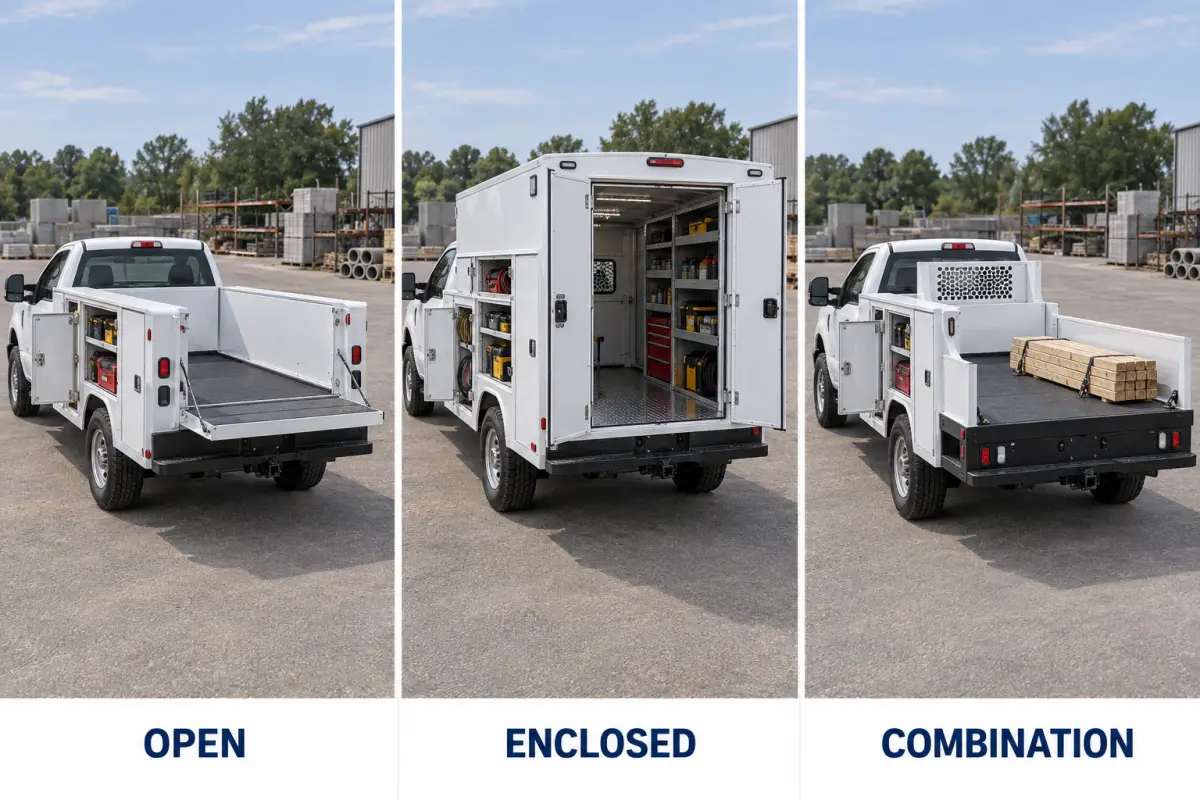
Open Service Body, Enclosed Body or Contractor Body?
The best body is the one that supports the loading and storage tasks you repeat most often. Start with the center cargo area, then decide how much surrounding compartment storage earns its place on the truck.
Open service body
Best starting point: field-service tools and parts, with occasional bulky cargo.
The open center provides overhead access and flexibility for taller items. The side compartments organize smaller equipment. Check the clear floor width, tailgate opening and tie-down locations for the largest item you carry.
Tradeoff: center-bed cargo is exposed. Lockable side compartments do not protect equipment left in the open bed.
Enclosed service body
Best starting point: tools and cargo that need a covered storage area.
An enclosure adds protection around the center space, but introduces door-opening and interior-height limits. Measure the item and the opening it must pass through, including handles, wheels or packaging.
Tradeoff: overhead loading and tall cargo may be restricted. Compare enclosed service bodies.
Contractor or combination body
Best starting point: a mix of service tools, building materials and equipment.
A contractor layout combines boxes, deck space and available racks. A combination service body retains compartment storage with a rear platform. Compare how much clear deck remains once storage and equipment are installed.
Tradeoff: extra deck access changes the storage layout. Explore contractor bodies and combination bodies.
Knapheide, Reading and Royal Service Bodies
These manufacturers offer different service-body families and configurations. We can help compare relevant options around the Ford vehicle, compartment needs and equipment you want. A product family is a starting point; the selected body model and its installation requirements determine the actual fit.
Knapheide
Knapheide’s lineup includes steel and aluminum service bodies, combo bodies and reinforced crane service bodies. The conventional layout combines exterior compartments with an open center bed; other families change the balance between cargo access, storage and specialized equipment.
For a closer look at construction and configuration choices, review the Knapheide aluminum service body at SWFL Upfit, including images and application notes. Use those details to discuss the body and chassis together.
What to compare: body size, compartment arrangement, material, rack needs and whether the job requires a purpose-built crane configuration.
Reading Truck
Reading offers Classic II steel and aluminum service bodies, the SL service body, Combo bodies and RHD options for heavier applications. These are distinct families, so their equipment and construction should be compared at the model level.
What to compare: usable compartment openings, storage arrangement, installed body weight and the difference between a conventional service layout and a combination or heavier-duty body.
Royal Truck Body
Royal’s service/utility range includes different compartment profiles, flip-top and closed-top choices, and configurations for single- and dual-rear-wheel applications. Its catalog also includes a Transit-specific service body, which is different from shelving inside a Transit cargo van.
What to compare: chassis requirements, compartment access, top-storage style, floor width and the exact body generation and model being quoted.
Compare equivalent builds. Two bodies with similar overall length may have different door openings, drawer space, floors, bumpers or equipment allowances. Ask for the proposed model, included features and optional items in writing. We will help confirm current supplier availability rather than assume every catalog option is on hand.
Steel or Aluminum: Which Service Body Should You Choose?
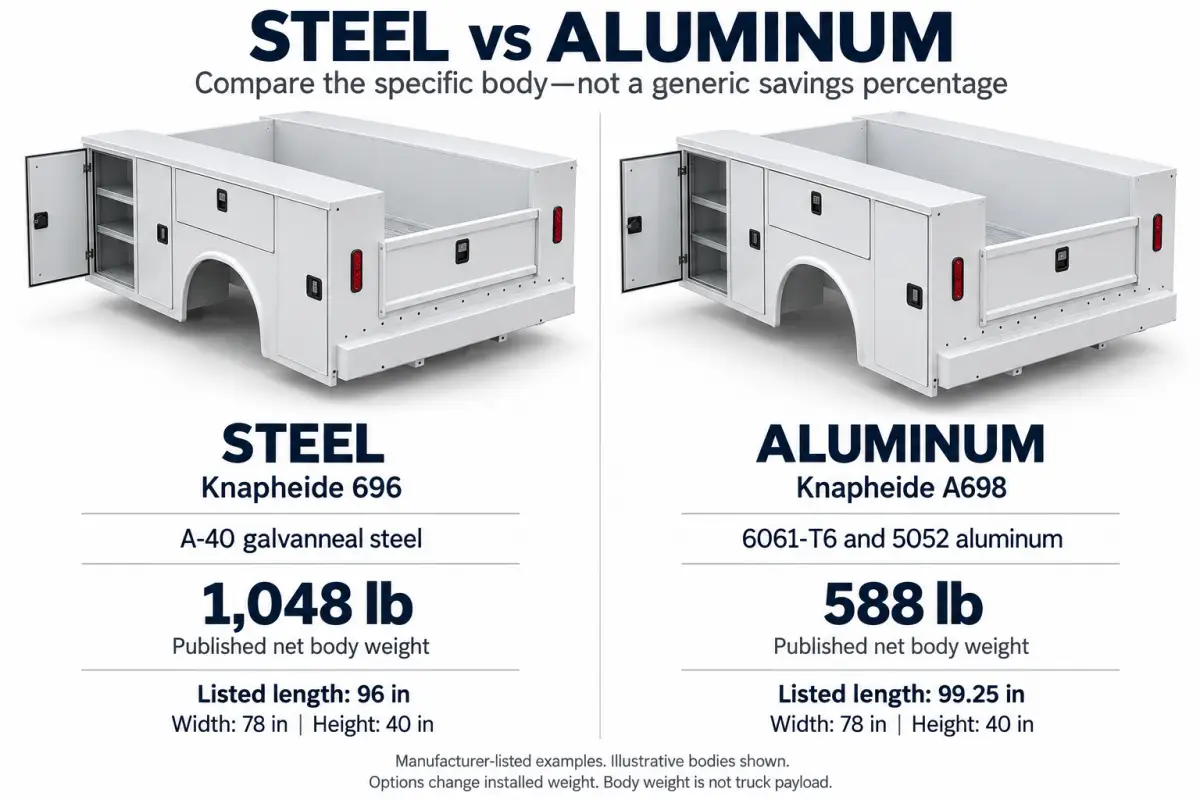
Choose the material as part of the complete body specification. Body weight, construction, operating conditions, repair needs and equipment compatibility all matter. A material label by itself does not tell you how much a finished truck can carry or how long the body will last.
Consider steel when…
Your shortlisted steel body provides the required construction, equipment support and storage at a suitable installed price. Compare its actual weight and protective finish, especially if the truck will carry substantial permanent equipment.
Look closely at the floor, compartment structure, door hardware and mounting provisions. For a heavily equipped truck, the approved body design matters more than a broad claim that one metal is always stronger.
Consider aluminum when…
Reducing body weight or addressing corrosion exposure is a priority, and an appropriate aluminum configuration supports the job. Compare like-sized bodies with equivalent equipment so the weight difference is meaningful.
Check which components are aluminum and where other materials are used. Review mounting requirements and repair support. Aluminum should not be treated as maintenance-free, and a lighter body does not increase the chassis manufacturer’s ratings.
In Southwest Florida, discuss outdoor storage, moisture, coastal exposure and the condition of coatings, seals and fasteners with the supplier. Follow the maintenance instructions for the actual body. Do not select a material on an assumed fuel-saving percentage or a promise that corrosion can never occur.
A better comparison: ask us to review two suitable body specifications on the proposed chassis, including equipment and installation. That reveals whether a weight difference leaves useful capacity for the tools and materials your business actually carries.
Design the Compartments Around Your Tools
Compartment count is less useful than knowing whether your equipment fits and can be reached. Measure the widest tool case, the tallest stored item and the depth needed with the door closed. Include handles, latches and anything that must remain attached during transport.
Daily-use storage
Place frequent-use tools and service parts where they are easy to retrieve at typical stops. Consider which side of the truck normally faces the work area and whether parked vehicles or walls restrict door travel.
Use adjustable shelves, bins and dividers to separate similar parts. A shelf full of unmarked boxes provides storage but still makes finding the right fitting difficult.
Heavy and bulky equipment
Plan equipment location with the body installer, including mounting, access and weight distribution. Avoid treating a tall compartment or convenient top surface as an approved mounting point.
Check drawer ratings, opening clearance and the space required to lift equipment out. A case that fits behind a door may still be awkward to remove once nearby equipment is installed.
Occasional cargo
Reserve center-bed space for items carried on particular jobs: replacement equipment, material deliveries or removed components. Measure both the item and its loading path.
Think about the return trip. Used parts, packaging or wet equipment need a planned location that does not block everyday tools or interfere with secured cargo.
Security is another layout decision. Compare individual locks, available central locking, door latches, seals and replacement-hardware support. Enclosed storage helps protect tools, but no compartment system makes theft impossible. Choose a practical locking routine your crew will use at every stop.

Choose the Chassis for the Finished Service Truck
Select the Ford truck and body together. Model name alone is not a fitment decision. A pickup and a chassis cab carrying a similar model designation can have different frame, dimensional and body-installation requirements. Body compatibility also depends on single or dual rear wheels and the specific chassis configuration.
Understand the measurements
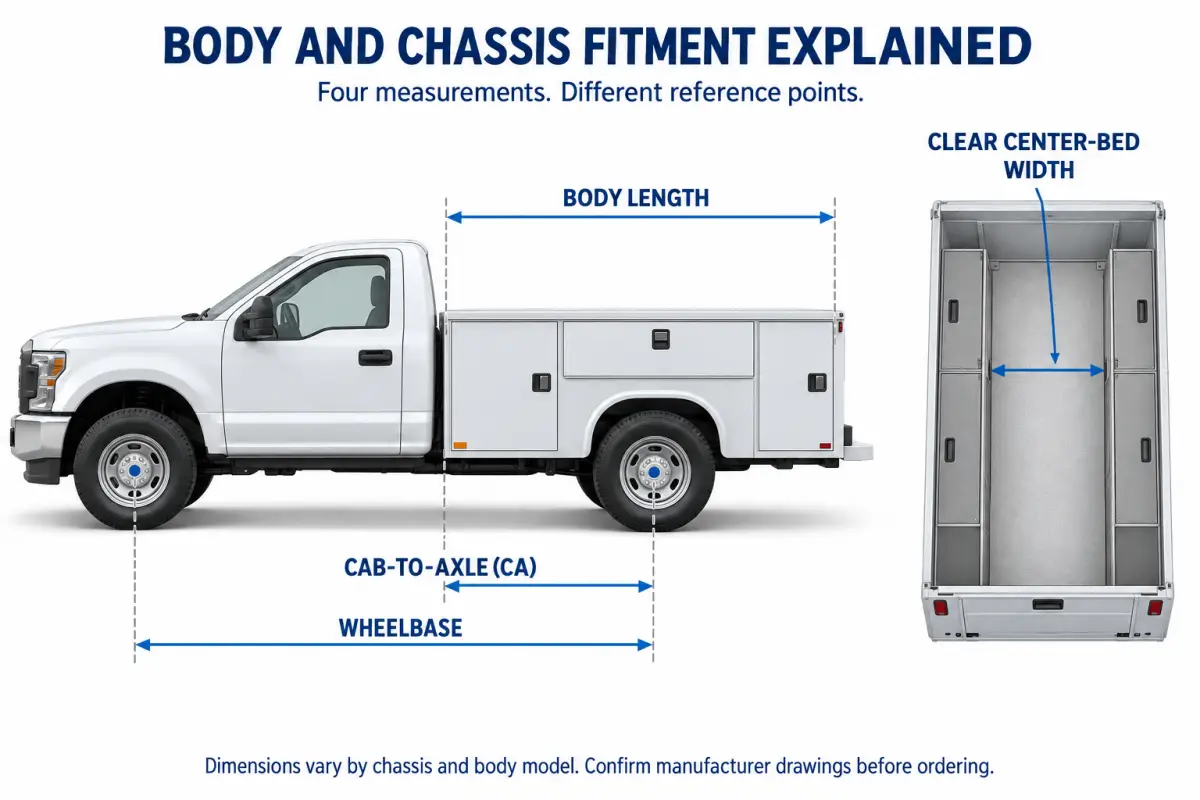
Cab-to-axle distance describes the relationship between the back of the cab and the rear axle; wheelbase measures between the front and rear axles. They are different measurements. The upfitter must match the body to the chassis dimensions, mounting requirements, rear overhang and equipment needs.
Overall body width is also different from clear cargo-floor width. Compartment depth, wheel housings and door construction affect useful space. Give us the dimensions of what you carry rather than relying on a body-length label alone.
Explore Ford Super Duty work trucks and Ford chassis cabs as starting points. We can narrow the selection after reviewing the body, crew, equipment and towing requirements.
Account for the complete working load
The finished truck includes more than a bare chassis and body. Plan for mounted equipment, racks, drawers, passengers, tools, supplies and the cargo carried on a busy day. Include trailer load on the truck when towing is part of the job.
The completed vehicle must satisfy its applicable total, axle and equipment limits. A body manufacturer’s compartment or crane rating is not the truck’s payload rating. Final verification should use the actual completed configuration and loaded axle weights where needed.
Avoid comparing two trucks using a maximum-capacity figure from a different configuration. Ask what remains available on the specific vehicle after the proposed installation. This is especially important when a crane, compressor, generator or substantial parts inventory stays on the truck permanently.
Choose Accessories That Support the Work
Every accessory should solve a defined problem. Decide what your crew needs on the truck each day, what can be carried only for certain jobs, and what requires a different body configuration.
Racks and long materials
A suitable rack can create a place for ladders or long material, but check its approved mounting, load rating and the vehicle’s resulting clearance. Confirm that flip-top lids and compartment doors can still open.
Review truck ladder-rack options around actual ladder length and loading method.
Drawers, lighting and power
Drawers organize tools and small parts; compartment lighting helps make stored items visible. Electrical equipment needs a defined power requirement and suitable installation.
List each device and how it will be used before choosing inverters or jobsite power equipment. Do not assume a generic outlet arrangement will support every tool.
Cranes and towing
A crane needs a body and chassis designed for its mounting and operating loads. Specify the weight to be lifted at the required reach, not simply the largest capacity in a brochure.
Compare crane-body trucks and mechanics trucks for this work. Review towing equipment as part of the finished configuration.
What Should Your Service Truck Carry?
These are planning examples, not claims about a particular installed truck. Use them to identify which details we should review for your business.
HVAC and mechanical service
A service technician may prioritize organized repair parts, meters, hand tools and recovery equipment. An installation crew may need much more space for replacement equipment. Compare the normal load and occasional large load separately.
If most equipment requires enclosed storage, consider both an enclosed service body and a Transit layout. Start with our HVAC contractor vehicle guide.
Plumbing and electrical work
Fittings, connectors and small tools benefit from divided storage, while drain equipment, reels and long materials need dedicated space. Check the dimensions of cases and equipment before choosing compartment shelves or drawers.
See vehicle planning for plumbing companies and electrical contractors.
Maintenance and construction
A maintenance truck may carry a consistent selection of tools and spares. A contractor moving materials between projects may need more open deck space. Avoid filling every available area with permanent storage before accounting for those changing loads.
Our general contractor guide helps compare service trucks with other commercial body choices.
For several trucks, create a repeatable equipment list and compartment plan. Standardize the features that help technicians move between vehicles, but allow for genuine differences between service, installation and supervisory roles. A common body specification should support the work rather than force every crew into the same layout.
Find an Available Truck or Upfit an On-Ground Chassis
A completed service truck
Start here when timing is a priority. Ask us to check available Ford service trucks and confirm the actual body, installed equipment and working capacity. Compare the truck against your must-have requirements before deciding that an existing build is suitable.
An available Ford chassis
An on-ground chassis can be a useful foundation when the body or equipment needs to be selected. Chassis availability and finished-truck availability are different: body sourcing, installation and completion checks still need to be scheduled.
A future planned build
If current vehicles do not fit your requirements, plan the chassis and upfit together. For factory-order and future fleet planning, visit FleetOrdering.com. We can help identify the appropriate next step.
What determines the price of a service-body truck?
The quote depends on the vehicle, body material and model, storage equipment, rack or crane provisions, electrical work, installation and other selected options. A body-only price is not a completed-truck price. Ask for a written scope showing what is included, what is optional and any charges outside that scope.
When comparing proposals, check whether they include the same drawers, locking arrangement, bumper, rack, lighting and installation work. Ask which warranty applies to the Ford vehicle, which applies to the body or accessories, and where service will be handled. This makes the comparison more useful than selecting the lowest headline number.
For timing, identify the date the truck must be ready to work, then separate vehicle availability, supplier availability and installation scheduling. We can help with upfit coordination and explain which steps apply to your proposed truck. Completion dates should be confirmed for the actual build.
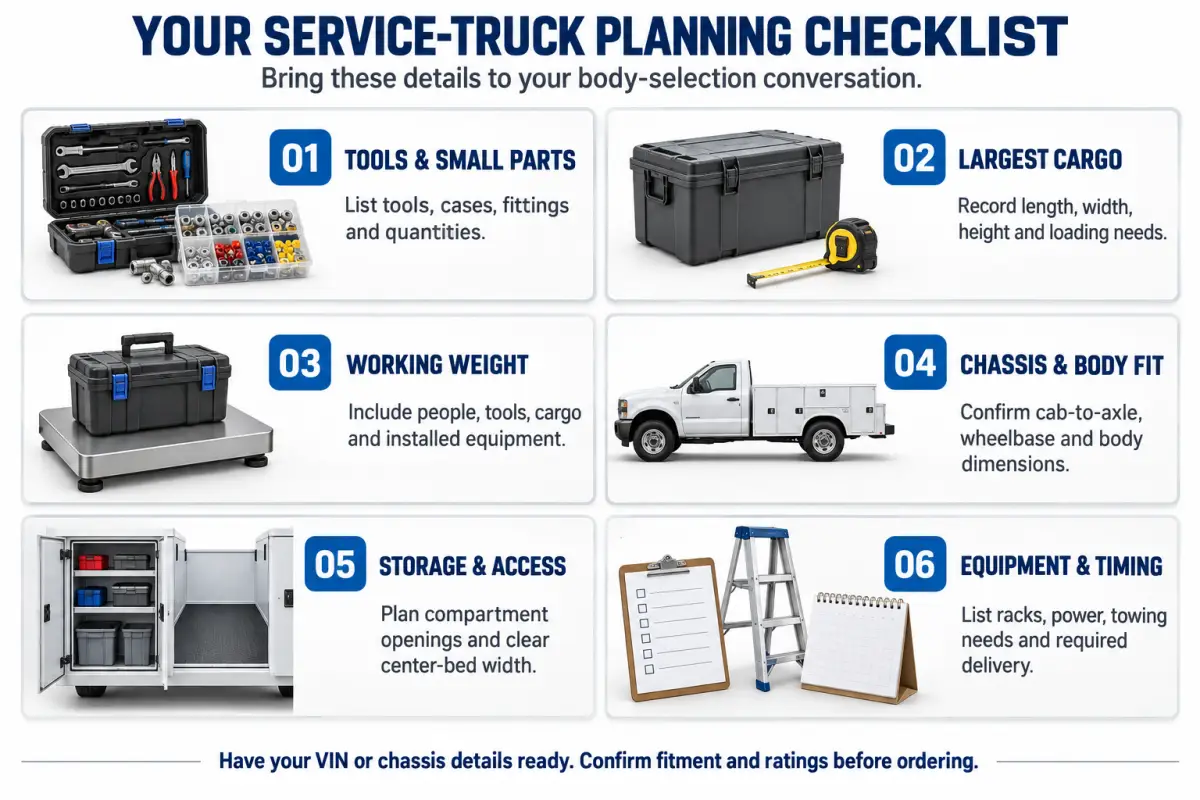
Six Details That Help Us Recommend the Right Truck
- Your work: trade, typical stops and whether the truck supports service, installation or both.
- Your equipment: largest items, tool-case dimensions and equipment that stays mounted.
- Your load: typical tools, parts, materials, passengers and occasional heavy cargo.
- Your access: parking limits, overhead clearance and how equipment is loaded.
- Your trailer: trailer type and loaded requirements if towing is part of the job.
- Your purchase: quantity, budget range, timing and whether you already have a vehicle.
If you do not know a measurement or body model, tell us what you do know. A list of equipment and a description of the work are enough to start narrowing the options.
Frequently Asked Questions
Is a service body the same as a utility body?
The terms often overlap, but they do not consistently describe the same enclosure. One supplier may use utility body for a conventional service bed; another may mean a covered cargo body. Confirm whether the center is open or enclosed, along with the compartment layout and openings, before comparing models.
Can you help me find a Ford service truck available now?
Yes. Contact us with your work requirements and timing so we can check current Ford vehicle availability at the dealership. We will distinguish a truck with its body already installed from a chassis that still needs an upfit. This guide describes options and does not represent a live stock list.
Which Ford chassis do I need for a service body?
The answer depends on the selected body, mounted equipment, crew, cargo and towing needs. Chassis dimensions and axle configuration also affect fitment. We can compare appropriate Ford trucks and chassis cabs after reviewing the intended finished vehicle; a model badge alone is not enough to approve an installation.
Is aluminum always better than steel?
No. Compare suitable bodies with equivalent dimensions and equipment. Body weight, construction, corrosion exposure, repair support and installed cost all matter. A lighter configuration can leave more capacity within the vehicle limits, but it does not raise those limits or guarantee fuel savings.
Should I choose an open or enclosed service body?
Choose based on loading access and protection needs. An open center allows overhead loading and accommodates some taller items; enclosed cargo must pass through defined openings and fit beneath the roof. Measure your largest equipment and consider which items must remain protected from weather or secured inside.
Can I add a crane to a standard service body later?
Do not assume that a conventional body supports a crane. The body, chassis, mounting, stabilizers and equipment must be appropriate for the intended loads. Mention future crane plans at the beginning so the proposed truck can be evaluated around the lifting weight, reach and frequency of use.
How do I know whether my tools will fit?
Measure tool cases and equipment, then compare them with clear door openings and usable compartment dimensions. Include handles and the space needed to remove an item. Check drawer travel, shelf placement and nearby equipment; an item can fit inside a compartment yet still be difficult to access.
Can a service-body truck tow a trailer?
A suitable configuration may tow, but the completed truck, hitch, body clearance and trailer requirements need to be reviewed together. Equipment and cargo already on the truck affect available capacity. Tell us about the loaded trailer and its use before the vehicle and body are selected.
What should a service-truck quote include?
Ask for the vehicle and body model, included storage and accessories, installation scope, optional items, applicable charges and expected timing. Confirm warranty and service responsibilities. Comparing equivalent complete proposals is more reliable than comparing a bare-body price with a fully equipped truck.
Can you help standardize several service trucks?
Yes. We can help develop a repeatable chassis, body and equipment specification for your fleet requirements. Start with the tasks shared across crews, then identify role-specific differences. Consistent tool locations and documented equipment lists can make replacement planning and moving between vehicles more straightforward.
Tell Frank What Your Service Truck Needs to Do
Need a completed Ford service truck, or a chassis we can help equip? Tell us about your tools, cargo and timing. We will help narrow the vehicle and body choices around your business.
In the message field, include your trade, largest equipment, any crane or towing needs and your ready-for-work date. If you are unsure about body size or material, we can start there together.
Call 239-274-2405 or email frank@commercialfleetvehicles.com.
Start With the Job. Find the Right Ford.
Let’s compare available vehicles, select useful body features and make the next step clear.
Explore all work-truck bodies and upfits or return to Ford chassis-cab options.