Commercial Fleet Solutions in Southwest Florida
Find the right vehicles for the work ahead, whether you need one replacement truck or several vehicles for growing crews.
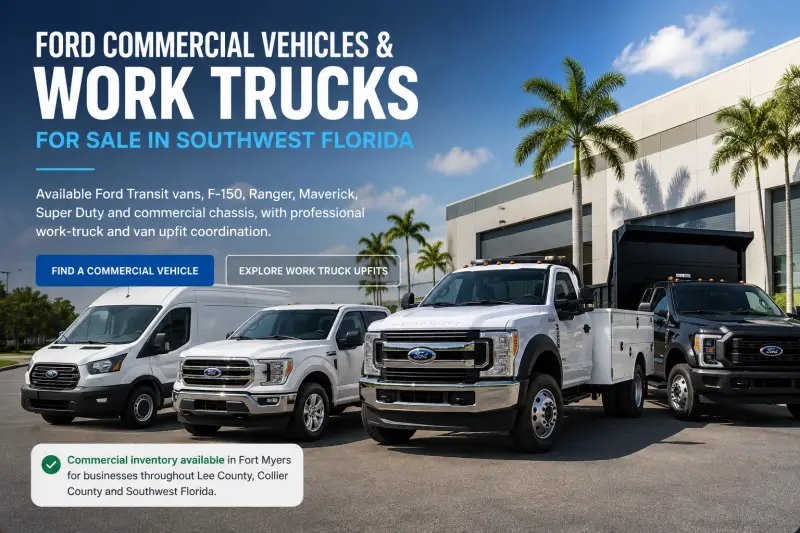
Start with Ford commercial vehicles available at the dealership. We help review your requirements, compare configurations and coordinate bodies or van upfits when needed.
Plan the Vehicles, Equipment and Timing Together
A useful fleet plan connects what your team needs today with the vehicles and equipment available to meet it.
Vehicle Selection
Compare cab space, cargo access, payload requirements and towing needs. We can help narrow the search across Ford pickups, chassis cabs and Transit vans.
Explore commercial vehicles →Upfit Coordination
Review body dimensions, installed equipment, chassis compatibility and installation timing before finalizing the vehicle setup.
Explore work truck upfits →Multiple Vehicles
Tell us your quantities, preferred common equipment and acceptable alternatives. Matching vehicles and completion dates depend on current availability.
Request a fleet quote →Prioritize the Vehicles Your Business Needs First
A vehicle leaving service can create a different deadline than a future crew expansion. Identify the most urgent replacements and tell us whether you can accept vehicles in stages.
We can review available configurations against your must-have equipment and discuss where an alternative may work. Confirm the final specification and ready-for-work date for each vehicle.
Information That Helps
- Current vehicle types and replacement priorities
- Daily mileage, routes and jobsite conditions
- Crew size, cargo and trailer requirements
- Body or interior equipment to install
- Vehicle quantity and target dates
- Budget and preferred purchase approach
Review the Complete Proposal
Make sure the vehicle and upfit scope are clear before deciding. Ask which equipment is included, what remains to be installed and how completion will be coordinated.
Vehicle & Upfit Pricing
Request pricing for the specific vehicle and equipment. Review the full proposal, including applicable fees and taxes, rather than assuming all configurations cost the same.
Purchase Arrangements
If you would like to discuss financing or leasing, mention that in your request so the appropriate dealership team can review available options with you.
Pickup & Delivery Planning
Discuss where the vehicle needs to go and who will receive it. Confirm any delivery arrangements, costs and timing as part of the proposal.
Choose the Fleet Planning Guide You Need
Each resource answers a different part of the commercial vehicle decision. Start with the question that is holding up your next step, then bring the remaining details into your vehicle inquiry.
Commercial Vehicle Consultation
Start with the work role, cargo, crew, access and timing. This guide explains how to prepare a useful vehicle discussion, separate requirements from preferences and compare available Ford candidates around the job. Use it when you know the business problem but have not yet settled on a model or body.
Fleet Vehicle Sales
Review how to evaluate available Ford commercial vehicles, confirm the actual configuration and organize the complete proposal. The guide connects vehicle selection with equipment and completion questions so an attractive model listing becomes a reviewable purchase discussion for your business.
Fleet Pricing
Compare the base vehicle, body or upfit, optional equipment and included work on a consistent basis. Learn which questions reveal meaningful differences between proposals, how to discuss applicable programs and why a single headline figure does not describe every finished commercial vehicle.
Commercial Vehicle Financing
Prepare questions about the complete purchase, acquisition terms and provider review. This guide separates vehicle selection from credit approval and explains what to clarify before comparing payment figures. It also identifies which information belongs in a secure financial process rather than a general inquiry form.
Commercial Vehicle Leasing
Understand how commercial lease structures can differ in equipment eligibility, usage and end-of-term responsibilities. Use the guide to prepare a realistic vehicle-and-work brief and ask the provider about the actual agreement. It is especially useful when an upfit or changing mileage affects the decision.
Fleet Vehicle Delivery
Plan vehicle readiness, upfit completion, receiving contacts and handover checks. The guide helps distinguish a vehicle being available from a completed work vehicle being ready for your crew, and explains what to discuss when pickup, delivery or an installer destination is involved.
Fleet Replacement Planning
Rank replacements by condition, reliability, work fit and business impact. Review equipment transfer, changeover timing and the specification of the next vehicle. Use this guide before an urgent failure limits your options or when the current vehicle no longer supports the work effectively.
Upfit Coordination
Turn a work requirement into an accepted vehicle-and-equipment scope. The guide covers installer compatibility review, loaded requirements, access, power equipment, written proposals and changes. Start here when a chassis cab needs a body or a Transit needs a trade-specific interior.
Multi-Vehicle Fleet Purchases
Organize quantities by work role, identify useful common specifications and track each unit through pricing and handover. This guide explains how to coordinate a purchase without losing the individual vehicle details that matter when crews, equipment or delivery destinations differ.
Turn an Operating Need into a Clear Vehicle Brief
A useful inquiry describes what the vehicle must accomplish during a normal busy day. Include the crew, tools, materials, large items, routes and loading method. Describe the problem with your current setup if you are replacing a vehicle. That is often more revealing than simply requesting the same model again.
Separate requirements that cannot change from preferences that can be discussed. Required seating, actual load and equipment compatibility deserve a different priority from a preferred finish or a familiar storage arrangement. This distinction helps evaluate available alternatives without losing the purpose of the purchase.
Use the industry guides for more focused questions about your trade. A service contractor, delivery business and material-hauling crew should not start from the same equipment assumptions. The better the work brief, the more useful the vehicle and installer discussion becomes.
Keep the Complete Vehicle in View
The base vehicle, body and installed equipment work together. Storage and accessories add weight, change access and can affect the completion schedule. A proposal should therefore describe the actual Ford configuration and accepted equipment scope, rather than leaving the upfit as an unspecified later decision.
For a chassis cab, the body and its working load need appropriate review. For a Transit, dimensions, doors, interior layout and carried equipment influence usability. Have the relevant professionals confirm the actual configuration and installation; a general model name or a similar-looking photograph does not establish compatibility.
Our commercial vehicle resources and work truck upfit guides provide the next level of detail. Use them to narrow the options, then request a complete proposal for a specific available candidate.
Make the Next Step Match Your Timing
If a vehicle is urgently needed, identify the work that cannot wait and the equipment that is essential from the first day. We can start with suitable available candidates and clarify what remains before handover. An in-stock chassis or van may still need installation work, so confirm readiness before scheduling the crew.
If the need is farther ahead, use the extra time to refine the specification and replacement priorities. Future factory ordering may be appropriate when a particular configuration or longer-term fleet plan calls for it. FleetOrdering.com is the related resource for that discussion.
For several vehicles, identify which unit matters first and whether staged handovers would work. A clear priority list helps the vehicle team discuss realistic options while the business prepares equipment transfer, receiving contacts and driver familiarization.
Use a Simple Review before Accepting the Proposal
Read the proposal in the same order your business will use the vehicle: the work role, the selected configuration, the installed equipment and the handover plan. This makes it easier to spot a missing detail than reviewing price alone. Ask the crew or supervisor responsible for the vehicle to check the requirements that affect daily use.
Confirm the Working Setup
Can the proposed vehicle carry the intended crew and load within its applicable ratings? Will the largest items load through the available openings? Does the accepted storage or body layout support the work sequence? Any uncertain answer belongs in the installer or vehicle review before the scope is finalized.
Confirm What Is Included
Identify the equipment, installation and other work in the proposal. Note items your business will provide and any optional additions. If an existing rack, body or interior is being transferred, confirm the installer has reviewed the actual transfer scope, compatibility and equipment condition.
Confirm the Handover Plan
Ask which steps remain before the completed vehicle can be received. Identify the responsible contact, destination and documentation process. Set aside time for receiving inspection, tool transfer and driver familiarization so the first working day reflects the finished setup rather than an assumed arrival date.
This review is useful for one vehicle and becomes especially valuable across several units. Keep the accepted scope and approved changes with each vehicle record. That gives your team a practical reference at handover and a better starting point when the next replacement or expansion is needed.
Tell Frank What Your Fleet Needs Next
If you are unsure which vehicle category to select, describe the problem in plain language. Examples include tools that are difficult to reach, equipment that no longer fits, an upcoming crew addition or a vehicle that repeatedly interrupts the schedule. Those details help us ask useful follow-up questions.
Share the vehicle roles, quantity, equipment and target date. You do not need a finished specification to begin; identify the questions you still need to resolve, and we can help organize the discussion around available Ford commercial candidates.
Use this form for business contact details and operating requirements. We can clarify the next step for vehicle selection, an upfit proposal or a provider conversation. Availability, pricing, installation and acquisition terms are confirmed separately for the actual transaction.
Call 239-274-2405 or email frank@commercialfleetvehicles.com if you prefer to start directly. Sensitive financial or identity documents should use the appropriate secure transaction process.
Fleet Planning Questions
Can you help a business buying just one vehicle?
Yes. Start with the work the vehicle needs to perform. We can help compare available options whether your business needs one vehicle or several.
Do I need a Ford Fleet Identification Number?
Tell us whether your business already has a FIN. You can review our Ford FIN information and discuss current eligibility and applicable programs with the dealership. Do not assume a particular incentive applies to every purchase.
Can an available vehicle be ready immediately?
Availability and ready-for-work timing are separate questions. A vehicle may need preparation, a body or equipment installation. Confirm the specific vehicle and remaining work before scheduling it for service.
Where can I plan future factory orders?
Visit FleetOrdering.com for factory-order resources and longer-term fleet planning. For near-term needs, we can first check available dealership vehicles.
Can you help compare different vehicle types for the same job?
Yes. Describe the load, crew, access and equipment so we can discuss appropriate available Ford candidates. A pickup, Transit or chassis-and-body configuration can support different working arrangements. The final choice should follow the actual job requirements and confirmed vehicle and upfit specifications.
Should we decide on the upfit before choosing a vehicle?
Define the intended equipment early, then coordinate vehicle selection with installer review. The actual configuration must support the body or interior plan. You do not need every accessory selected before contacting us, but major load, layout and power requirements should be part of the first discussion.
Can a fleet purchase include several different work roles?
Yes. Group the required vehicles by role and identify the quantity, equipment and timing for each group. Some specifications may usefully match, while others should differ. We can help organize the available candidates and proposals so each unit remains tied to the job it needs to perform.
What makes a fleet quote easier to compare?
A clear quote identifies the actual vehicle, accepted body or upfit scope, included work and relevant transaction charges. Keep optional items and unanswered questions visible. Compare complete proposals on the same basis and confirm which acquisition or program terms apply to the actual purchase.
Build a Vehicle Plan Around Your Business
Share your priorities, quantities and timing so we can discuss the next step.