Ford Work Trucks for Landscaping Companies
Choose a landscaping truck around the route, equipment and material that earn your business. We help landscape companies compare available Ford pickups and chassis cabs, then plan the body, storage or trailer-related setup needed for the work.
A maintenance route may call for a crew truck and equipment trailer. Installation work may need a landscape or dump body with a different loading process. Start by separating those roles, then check the complete loaded vehicle, access and equipment fit before making the purchase.
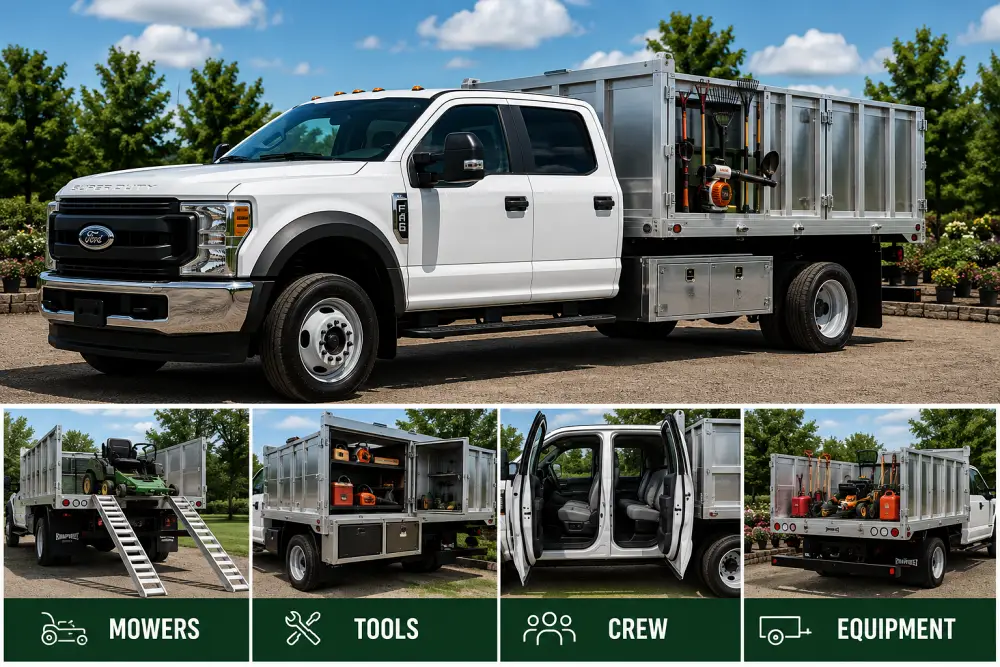
Model illustration; confirm the configuration and availability of the specific vehicle.
Maintenance, Installation and Cleanup Need Different Plans
A lawn-maintenance crew usually repeats a familiar equipment-loading routine across many stops. An installation crew may move plants, soil, mulch or other project material and spend longer at each location. Cleanup work creates another load pattern because the vehicle collects material during the day rather than simply leaving the yard with its full load.
Describe the primary role and the tasks that regularly overlap. List the equipment that always travels, the material that changes by assignment and the people riding in the cab. If one truck covers several services, identify where those duties compete for space or capacity. A purchase should solve that conflict instead of giving it a larger place to accumulate.
Review the last few busy workdays. Note extra trips, loading delays and equipment that had to be left behind. These details help determine whether you need a different truck, a different body, a revised trailer layout or a separate delivery arrangement. We can help compare available Ford candidates once the business requirement is specific.
Match the Ford Truck and Work Body to the Route
Pickup & Equipment Trailer
A Ford F-150 or Super Duty may suit a properly matched maintenance setup. Review the crew, tools and loaded trailer together for the exact vehicle.
Landscape Body
A landscape body can provide a dedicated cargo area with access and storage options. Compare side and rear loading, compartment placement and the material it is intended to carry.
Landscape Dump Body
A landscape dump body adds an unloading function for suitable applications. Body volume, hoist equipment and completed vehicle capacity all need review.
For a dedicated body, begin with a compatible Ford chassis cab. Cab size, wheelbase, body dimensions and installed weight affect the final result. A body that offers more volume does not automatically provide more allowable material weight. Confirm the actual combination instead of selecting the body and hoping to find a chassis afterward.
Create Two Load Lists: Leaving the Yard and Returning
The start-of-day load might include people, mowers, handheld equipment, tools and supplies. The return load may include collected vegetation, unused project material or equipment moved from another crew. Write down both conditions. The larger or less familiar return load can be overlooked when a truck is evaluated only while it is clean and organized at the yard.
Separate permanent weight from changing cargo. Toolboxes, racks, the installed body and other accessories remain with the truck regardless of the job. They use part of its carrying capacity before daily material is added. If a trailer is attached, the applicable tongue load also affects the truck’s payload.
Use known equipment weights and supplier information for material, and identify estimates that need confirmation. Review the completed vehicle’s overall and axle ratings, tires and any towing equipment. Keep the load plan available for the crew so a change in equipment or material does not quietly invalidate the assumptions used to choose the truck.
Treat Bulk Material Weight Separately From Body Volume
Mulch, soil, stone and collected vegetation do not create the same load simply because they occupy the same space. Material condition can also affect weight. A body’s stated volume describes space; it does not establish how much of every material the completed truck can carry.
Tell the body supplier which materials you handle, how they are loaded and the quantities you expect to move. Consider whether the vehicle is intended mainly for light bulky material, denser installation material or mixed work. The body, chassis and unloading equipment should be assessed for that application.
Plan the loading conversation at the supplier as well. The person filling the body needs a clear load instruction based on the truck’s actual requirements, not an assumption that every visible opening should be filled. If a job needs more material than the vehicle can carry, compare staged trips or delivery rather than using body space as the deciding limit.
Make Equipment Loading Work at Every Stop
Record the dimensions and operating weight of equipment transported on the truck or trailer. Include attachments and the transport position of handles or decks. Review the loading path, ramp or lift equipment where applicable, and the space needed to secure each item. A machine fitting on the deck is only one part of a usable setup.
For repeated maintenance stops, think about retrieval order. Equipment used early at most properties should not be trapped behind items used occasionally. Storage for handheld tools should be reachable without interfering with machine loading. Walk through the process with the crew before accepting a layout.
Have the equipment installer confirm suitable loading and securement provisions. Match the procedure to the locations the crew actually serves, including limited space around the parked vehicle. This guide helps define purchase requirements; the equipment manufacturer’s instructions and the installer’s approved operating procedures govern the final setup.
Choose Tool Storage That Supports Restocking and Cleanup
Give hand tools, spare parts and frequently used supplies assigned places. Long-handled tools need a transport arrangement suited to their dimensions and the body. Smaller tools may be better organized in labeled boxes or compartments. The goal is quick retrieval and an obvious place to return each item.
Describe the storage needs of any products or fuel-powered equipment to the upfitter and follow the relevant product and equipment requirements. Do not assume that an ordinary toolbox or enclosed cargo area is suitable for every item. Resolve those details as part of the equipment plan before selecting compartment sizes and locations.
Leave access for inspection and cleaning. A body or storage layout that traps debris around equipment can make routine care harder. Ask how doors, latches, drains or other relevant features are maintained on the proposed body. Simple access to serviceable parts matters when the truck works across a full route every day.
Review the Truck and Trailer as One Working Combination
Provide the trailer’s specifications and expected loaded condition, including machines and other cargo. Identify whether the same trailer stays with the truck or several trailers will be used. The candidate vehicle must be assessed for the intended combinations rather than the lightest trailer in the yard.
Include crew and cargo carried in the truck. Towing capability does not replace payload review, and trailer tongue load uses part of the truck’s carrying capacity. Confirm the required hitch equipment and the applicable vehicle and combination limits for the exact Ford configuration. A model-wide maximum cannot answer that question on its own.
Then test the practical route fit. Consider turning, parking, gates and where the crew can load or unload. A combination that meets its ratings may still be inconvenient at frequent stops. Our towing equipment guide helps organize the questions to bring to the vehicle discussion.
Plan Crew Space, Route Access and Growth Together
Choose cab space for the people who actually travel together and define where their gear will be carried. If you expect to add a crew member, include that in the load and seating discussion now. Keep growth assumptions specific so the truck is not oversized for an expansion that has no clear role or timing.
Measure recurring access restrictions and consider the completed truck’s length and height. Include any racks or other equipment. A landscape body with useful volume may need a different parking and turning routine from the current pickup. Review that change with the people driving the route.
For multiple trucks, standardize labels and common equipment positions where useful, while allowing maintenance and installation vehicles to differ. Record the accepted specification and crew feedback. A repeatable plan can make later purchases easier without assuming that every truck in a growing landscape business should have the same body.
Ask for the Finished Truck Scope and Completion Schedule
Start with available Ford inventory when you need a truck soon, and identify the body or equipment still required. Ask for the specific vehicle, installation work and optional items to be listed separately. Confirm what is already on the truck and what remains proposed. That distinction makes price comparisons more useful.
Give us your target ready-for-work date. Body sourcing, installation and equipment transfer may have different schedules from the vehicle purchase. If you hope to reuse racks, boxes or other components, identify them before quoting so their condition and compatibility can be assessed.
Before handover, review the accepted layout with a representative load and confirm the equipment documentation and support contacts. The crew should understand the installed system and its operating requirements. Keep a record of the configuration if the business plans to add similar trucks or standardize a route fleet.
Example: Separate Route Equipment From Installation Material
Imagine a landscape company whose maintenance truck carries a full equipment trailer, then also handles occasional bulk-material pickups. The material run delays the route and leaves little room for the return load. This is an illustrative planning example, not a stated customer result.
The company could compare retaining a focused maintenance setup with adding or scheduling separate installation support. A body-equipped truck might serve that role, or supplier delivery might address less frequent work. The decision should reflect job frequency, loads and the time spent moving equipment between assignments. A clear role comparison comes before choosing a bigger truck.
Bring These Details to the Conversation
- Maintenance, installation or cleanup role
- Crew size and complete equipment list
- Trailer details and loaded condition
- Bulk material types and usual quantities
- Start-of-day and return-load requirements
- Route access limits and ready-for-work date
Include your vehicle quantity, target ready-for-work date and any stock number you are considering.
Let’s Match the Vehicle and Equipment to Your Work
Tell Frank which landscaping services the truck will support and what it needs to carry. We can help compare available Ford vehicles and clarify the landscape body, storage or trailer-related requirements for a complete proposal.
Start with what you know. We can help compare available Ford vehicles, identify the requirements to take to the upfitter and clarify the proposed equipment, price and completion schedule. Vehicle availability and installation timing are confirmed separately.
Send your requirements below, call 239-274-2405 or email frank@commercialfleetvehicles.com.
Landscaping Truck Buying Questions
What Ford truck is best for a landscaping company?
The best choice depends on whether the truck supports maintenance, installation, cleanup or a defined mix. Compare crew size, equipment, material and trailer requirements against the exact vehicle. A pickup-and-trailer setup and a body-equipped chassis cab solve different work patterns. We can help build a shortlist from your requirements.
Should I choose a landscape body or a landscape dump body?
Choose based on loading and unloading needs, material type and the role of the truck. A landscape body provides a cargo arrangement; a dump-equipped setup adds an unloading function for suitable work. Confirm body fit, installed weight and completed vehicle capacity instead of choosing from volume alone.
Can you help find a Ford truck already at the dealership?
Yes. Send your work role, load list and deadline so we can discuss available Ford candidates. We confirm the equipment and availability of the specific truck. If it needs a body or additional upfit, that work receives its own scope and schedule before the setup is treated as ready for your route.
How much mulch or soil can a landscaping truck carry?
That depends on the exact completed truck, its remaining capacity and the material’s weight and condition. Body volume alone cannot answer the question. Use actual vehicle ratings and reliable material-weight information, including people and equipment already onboard, to establish the appropriate load for the application.
Can the truck carry tools while towing our mower trailer?
Potentially, after the complete combination is reviewed. Include the crew, tools, installed accessories and applicable trailer tongue load in the truck’s carrying requirements. Confirm the loaded trailer and the vehicle, hitch and combination limits for the specific Ford configuration.
Should every maintenance truck use the same equipment layout?
A consistent layout can simplify loading and crew changes when the trucks perform similar routes. Standardize common tool positions and labels, but account for different machines and service roles. Installation or cleanup trucks may need a different body and storage arrangement even within the same business.
Can we reuse tool racks or boxes from our current truck?
Possibly, after condition and fit are checked. A new body or vehicle can change mounting locations and access. Identify proposed reused equipment before the quote so inspection, transfer and installation costs are included. Reuse should be evaluated as part of the complete setup rather than assumed to be automatic.
What should I send for a landscaping truck quote?
Provide crew size, services performed, equipment weights and dimensions, trailer information, bulk material needs and the target date. Include both departure and return loads. Photos of the existing setup help explain access problems. Use the form above or call Frank to begin comparing vehicles and bodies.
Build a Truck Plan Around Your Landscaping Route
Bring your equipment list, material needs and deadline. We will help you compare available Ford trucks and the body or equipment choices that fit your crew’s work.
Landscape Bodies • Landscape Dump Bodies • Ford Super Duty • Request a Quote