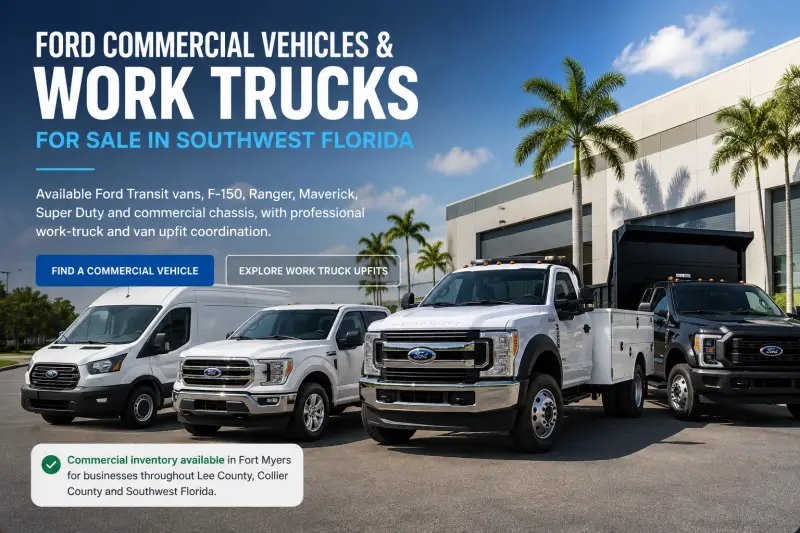
Ford Commercial Vehicles by Industry
The right work vehicle starts with the work you do. Compare Ford trucks, chassis cabs and Transit vans around your crew, equipment and daily routes.
We help Southwest Florida businesses check vehicles available at the dealership and coordinate commercial upfits when needed.
Find the Vehicle Guide for Your Business
Choose your trade or operating role below. Each guide covers vehicle selection, equipment planning, common buying questions and the details to send for a quote. If your business performs several kinds of work, use the guides to define the role of each vehicle.
HVAC Contractors
Compare a service van with a service-body truck around HVAC tools, replacement parts, ladders and larger equipment. The guide explains daily service inventory, installation-support loads and the information needed to discuss available Ford vehicles and a complete upfit.
Plumbing Companies
Plan a plumbing vehicle around small fittings, long material, drain equipment and the items brought back from calls. Compare interior storage with exterior compartments and learn how a clear repair or installation role improves the truck-and-upfit specification.
Electrical Contractors
Organize electrical parts, tool cases, ladders and project material without losing daily access. Compare van and truck arrangements, identify power-equipment questions and prepare a practical inventory for a vehicle proposal that reflects your crew’s recurring work.
Roofing Contractors
Compare roofing trucks around crew transport, material, tools and equipment trailers. Review the difference between occasional project support and everyday loads, and identify the completed body and towing details that should be included before selecting a Ford candidate.
General Contractors
Choose a contractor vehicle by the work it performs, from supervision and service to material and crew support. The guide helps separate job roles, compare bodies and organize a complete vehicle request around load, access and timing.
Landscaping Companies
Plan mower transport, tools, loose material and equipment trailers as one working arrangement. Compare landscape bodies and truck roles, with an illustration showing a possible setup and practical questions about loading, storage and the completed vehicle’s capacity.
Restoration Companies
Review restoration equipment dimensions, transport requirements and the return of used equipment from jobs. Compare enclosed vehicle layouts and larger cargo options while keeping daily tools accessible and separating equipment that is ready for work from items awaiting attention.
Pool Service Companies
Build a pool-service vehicle plan around the actual products, parts and equipment carried. The guide explains product-specific handling review, service inventory, route access and the difference between selecting a vehicle and accepting the complete storage arrangement.
Pest Control Companies
Compare vehicles for pest-control routes using the actual equipment and product requirements. Plan storage, separation and replenishment around the company’s operating procedures, then identify the information an upfitter needs before proposing a completed truck or van setup.
Telecom & Fiber Contractors
Organize telecom and fiber tools, diagnostic cases, cable-related equipment and job materials around service or installation work. Learn which dimensions and manufacturer handling requirements belong in the vehicle brief and how to preserve access during changing assignments.
Delivery & Logistics
Compare delivery vans and box-body trucks using load dimensions, stop order and customer receiving conditions. Review carts, loading equipment, returns and capacity so the next vehicle supports the whole route rather than only the departure load.
Commercial Cleaning Companies
Plan a cleaning vehicle around machines, supplies, tools and used equipment returning from sites. Compare cargo access, loading aids and cleanable storage while using equipment-specific transport requirements to define a practical completed van or truck arrangement.
Security Companies
Define whether the vehicle supports installation, service, supervision or another security-company role. Compare storage and cargo needs, identify equipment integration questions and prepare a specification that keeps the daily kit available without assuming every team needs the same setup.
Locksmiths
Compare locksmith work vehicles around organized parts, tool cases, work equipment and power needs. The guide focuses on vehicle selection and interior planning, with practical questions about machine requirements, inventory access and the full cost and completion scope.
Fence Contractors
Plan fence installation support around posts, panels, tools and equipment trailers. Compare service storage with material-hauling arrangements, review the largest recurring load and identify what needs to remain accessible when project materials are on the truck.
Irrigation Companies
Separate irrigation repair inventory from installation material so fittings and diagnostic tools remain accessible. Compare vans, service bodies and support trucks using pipe lengths, job packages, wet or used returns and the crew’s normal equipment load.
Septic Companies
Distinguish septic repair vehicles, installation-support trucks and specialized collection builds. Learn what information belongs in a body-and-chassis review, why tank volume is not vehicle payload, and how to request a complete equipment and installation proposal.
Tree Service Companies
Compare chip bodies, dump bodies and crew-support trucks around the tree-service job. Review chip volume versus payload, chipper towing and assigned tool storage, with an existing forestry illustration and clear questions for specialized equipment planning.
Painting Contractors
Choose a painting van or truck around sprayers, ladders, preparation tools and job-specific materials. Plan clean supplies and used returns separately, preserve the daily kit during larger projects and identify product requirements before approving storage equipment.
Glass Companies
Match a glass-company vehicle and carrier to actual products, panel dimensions and routes. Compare interior and exterior racks, distinguish rack ratings from vehicle capacity and plan access to installation tools as the delivery load changes.
Garage Door Companies
Compare garage door repair vans and installation-support vehicles using parts inventory, long components and packaged products. Plan ladders, tool access and removed material returning from jobs so the setup works throughout the service day.
Sign Companies
Define the vehicle role for sign installation, service or delivery, then compare product space and equipment needs. The guide also explains when aerial or lifting equipment requires a qualified builder’s complete chassis-and-system specification before vehicle selection.
Food & Beverage Distribution
Compare food and beverage delivery vehicles around product conditions, cargo weight, stops and loading equipment. Review dry and refrigerated arrangements, usable space after conversion and the information needed to discuss an accepted body or refrigeration package.
Medical Delivery
Plan medical delivery vehicles using documented cargo and transport requirements. Separate ordinary supply routes from specialized product needs, and review package access, handling equipment, monitoring and the acceptance process for the complete vehicle or conversion.
Government & Municipalities
Build a government fleet specification around each department’s work, mandatory requirements and acceptance checks. Compare available vehicles through the agency’s authorized purchasing process while keeping body equipment, proposal differences and the target in-service date clear.
Fleet Management & Leasing Companies
Source Ford vehicles for fleet-management and leasing clients with an approved specification and visible milestones. Learn how to review stock alternatives, document upfit scope and coordinate the dealer, provider, installer and receiving team for completed delivery.
Compare Setups for Your Type of Business
These are starting points for a vehicle conversation. The best configuration depends on the actual load, crew and equipment, even within the same trade.
HVAC, Plumbing & Electrical
Organize replacement parts, tools, ladders and larger equipment around the technician’s daily service calls. Compare enclosed Transit storage with an accessible service body.
Explore Transit vans →Construction & Contractors
Plan room for crews, material, tools and trailers. Bed access, jobsite conditions and the loaded towing requirement help determine the truck and body.
Explore contractor bodies →Landscaping & Tree Service
Match mowers, loose material, debris and towing needs to the body. Check loading angles, unloading method and the weight of a full day’s work.
Explore landscape bodies →Delivery & Distribution
Start with the largest shipment, route conditions and loading equipment. Compare van access with the dimensions and loading height of a box body.
Explore box trucks →Mobile Service & Repair
Keep frequently used tools within reach and plan secure storage for parts. Discuss power, lifting or compressed-air equipment before selecting the chassis.
Explore mechanics trucks →Property & Specialty Services
Cleaning, pest control, restoration, pool service and other field teams need space planned around their own materials and workflow. Tell us what your team carries.
Discuss your requirements →Think Beyond the Vehicle Name
Use the industry guides to identify the questions that matter for your next purchase, then make a short list of required features and acceptable alternatives. Include the operator’s experience with the current setup. That turns a broad vehicle search into a comparison of practical options and helps identify whether the main constraint is cargo weight, dimensions, equipment access or completion timing.
A van that works for one service crew may not fit another crew’s longest equipment. A truck that tows the right trailer may still need a different body or storage layout.
Review the finished vehicle with occupants, cargo and installed equipment included. Confirm dimensions, payload, axle limits, towing equipment and access before committing to a configuration.
Compare truck bodies and commercial upfits →Bring a Simple Workload List
- People riding in the vehicle
- Largest tools and cargo dimensions
- Typical and heaviest expected loads
- Trailer details and loaded weight
- Parking, roof clearance and jobsite access
- Vehicle quantity and target completion date
Available Vehicles and Upfit Planning
Ask about finished work vehicles already on the ground, available chassis cabs that can receive a body, and Transit vans that can be equipped for your trade. We will distinguish vehicle availability from installation timing.
Pickups & Work Trucks
Compare cab, bed and equipment needs for supervisors, crews and towing applications.
Explore Super Duty →Chassis Cab Trucks
Coordinate a body and the correct chassis dimensions for your commercial application.
Explore chassis cabs →Transit Work Vans
Plan enclosed cargo space and an organized interior for tools, parts or deliveries.
Explore Transit →Tell Frank What Your Business Needs to Carry and Do
Use the form below to describe your trade, crew, tools, material and target date. Include a stock number if you are considering a particular vehicle. You do not need a finished specification to begin; a clear description of the daily work is a useful starting point.
We can help compare available Ford trucks and vans, identify body or interior requirements and clarify what remains before the vehicle is ready for your team. For specialized equipment, the appropriate installer must confirm the accepted configuration. Vehicle availability and installation timing are reviewed separately.
Call 239-274-2405 or email frank@commercialfleetvehicles.com if you prefer to start with a conversation.
Industry Vehicle Questions
Should I choose the vehicle or the upfit first?
Define the job and equipment requirements first, then compare the vehicle and upfit together. A body or specialized system can require specific chassis dimensions and capacity. For a van, cabinets, racks and conversion equipment affect usable space and weight. We can help identify available Ford candidates once those requirements are clear enough for the appropriate installer to review.
What is the difference between a vehicle being available and ready for work?
An available unit may be a completed work vehicle, a van needing an interior package or a chassis awaiting a body. Confirm the specific unit and what is already installed. The ready-for-work date should include remaining installation and the agreed review of the finished setup. Share the date your crew needs the vehicle so the proposal reflects the whole process.
What if my business needs several different vehicle roles?
Define the recurring load and work for each role. Service, installation, material delivery and supervision can share useful fleet standards while using different vehicles. Common labels and tool kits may help consistency, but the body, storage and capacity should follow the actual assignment. Send the quantities and timing by role so we can compare a practical group of Ford candidates.
Can you help if my business is not listed?
Yes. Describe your work and what the vehicle needs to carry. We can discuss suitable Ford vehicle and upfit options around those requirements.
Can several crews use matching vehicle setups?
We can review a common specification and check available vehicles and equipment. Matching configurations depend on inventory, body availability and installation scheduling.
Where should I start for a future fleet order?
For factory ordering and longer-term replacement planning, visit FleetOrdering.com. For current vehicle needs, ask us to check dealership availability first.
Tell Us What Your Team Does Every Day
We will help you work through the vehicle, body and equipment choices.